Following coverage of the abortion battle is something of a roller-coaster ride. It is such a hotly-debated issue and each side generally makes a strong argument for being either pro-life or pro-choice.
The more research I do, the more questions keep popping up in my brain. The pro-lifers argue that legalizing abortion will cause women to be more casual about the decision and the number of abortions will rise. Pro-choice advocates say that making abortion illegal won’t stop women from going through with the procedure, and it will only force them to take unsafe measures, such as having the procedure done in back-alley clinics with untrained doctors. So which side is correct?
Finally, I came across an article in The New York Times that put to rest a lot of my questions. A global study concluded that abortion rates were the same in countries where it is legal compared to those where it is illegal. It concluded that making abortion illegal has no effect on a woman’s decision to terminate her pregnancy. The only difference is that in countries where abortion is legal, the procedure is considered safe, and where it is illegal, the procedure is dangerous and performed in secret.
There is a lot more conclusive information from the study, so here is the link: http://www.nytimes.com/2007/10/12/world/12abortion.html
From a critical viewpoint, the article was informative and eye-opening. It did answer my question regarding what the best plan of action to take is to reduce the need for abortions, which the study proved, is the use of contraceptives, and not abstinence education. The one thing that bothered me about the article was the amount of statistics the reporter used. The entire article was jam-packed with numbers and research conclusions. I found myself having to weed-out the less essential information in order to get to the important facts. It was comparable to the effects of compassion fatigue. By the middle of the article I had read so many statistics that they lost their impact.
Sunday, September 20, 2009

Thursday, November 6, 2008
My Own Adagios

What is dance? What is movement? What makes a dancer a dancer? And why do dancers dance? In this, my first dance blog in a series of humbly insightful weekly essays on dance in the modern world, I will examine the definition of dance, particularly contemporary dance. Last year, in a series on the meaning of a dancers life, I received quite a bit of dance feedback and got some serious dance controversy going over the truism “to dance is to live,” as I presented my converse thesis that “to live is to dance.” I hope to generate a similar discourse with this dance blog series.
I have been recently privileged to observe a dress rehearsal of three historic masterworks. Well, actually, I didn’t really watch the dress rehearsal itself, but I received an official recording of it. Well, actually, it wasn’t exactly an official recording, but it was a video somebody made from the wings of a pretty good mark through and then put up on Youtube. It has since been taken down, I’m sure for copyright reasons. Like I said, it was a pretty good mark through. At any rate, I feel very strongly that these works entirely embody my ideas about the definition of dance. I have never seen such deeply moving choreography. In all my years of training and all my performance experience, I will say with authority that these dances, themselves, could define dance for all the world.
The glowing effervescence of the first work, which contained a plethora of girls in green and purple chiffon dresses and several men in sherbet-colored spandex, spoke of the love and beauty of movement. The dancers floated and flitted across the stage, weaving in and out with serene, early-morning smiles gracing their faces. Dance is grace and beauty. Movement sings from the soul and lightens the energy in the air around it. As I watched their 6:00 extensions and twitching, fluttering arms, I felt my spirit elevated to the heavens. In my experience in the dance world and as a dancer, this joy surely defines all the time I have spent moving. I remember my most recent performance, as I executed my very last shimmy to the audience before my final pose, glorying in the glitter of the sequins on my costume and the rhinestones in my tights and feeling that lovely thrill that my audience’s lives might have been changed by my performance to “I Hope You Dance.”

The second piece, by contrast, whose long and complex foreign name I refuse to defile by spelling out here on this humble website, was all darkness and struggle. Dance was here presented as a convoluted travail, an epic, endless, painful battle against pounding authority. I wasn’t entirely certain of the plot at times, or really at anytime, but what struck me the most were the twisted, contorted positions of the dancers, and the unnaturally pained expressions on their faces. Their costumes were hideously ugly and plain, except for one glorious green dress worn by the shortest girl. I could go on for hours about my personal interpretation of the dance movement by movement, but I think the most significant opinion of mine is the way in which this dance impressed me as a description of my personal experience of long rehearsals in the studio, as when I was preparing for my aforementioned performance of “I Hope You Dance.” Although I did not have a rehearsal coach and I choreographed the solo myself, I pushed myself to the point of breaking, for the sake of my art. And because I didn’t really have a studio either, but rehearsed only in my living room, the way I used my furniture, doing layouts off of my loveseat and stepping from coffee table to easy chair to finally leap to the floor, closely resembled much of the choreography in this work, which was organized a series of square boxes, often used as chairs. It depicts dance as a struggle, a dancer as her own worst enemy, and the torment of failure which could drive one to the brink of suicide no matter how beautiful one’s dress may be, is as relevant and poignant as the enchantment and beauty of the first piece.
The last work was my favorite, as it emphasized the grittiness and humanity of dance. I hated the costumes, but the music was just so…ethnic. I could hardly get over it. The best part of the dance, in my opinion, was at the end when a whole crowd of people burst onto the stage and shook the life out of the audience. I could hardly contain my joy. The celebration and the ecstasy of the movement contrasted with the drab homeliness of their hideous costumes reminded me of the glorious feeling of dancing in the midst of a run-down, boring world. This reminded me of dance as escape, dance as the path to enlightenment or heaven or someplace better than where I am now. It gave me the strangest sensation that I was somehow on my way somewhere. Just like when I was finally, after so many long nights rehearsing in front of my webcam, invited to perform “I Hope You Dance” at a Senior Center downtown. All those people in the audience…the applause was deafening. At least I’m pretty sure it was applause and not snores or random flatulence or anything. And I’m sure they would have given me a standing ovation if they could have stood at all. At any rate, it was a defining moment for me and my career, and 5 years later, I am still hoping for another opportunity like that. I keep trying to email and network with my contacts but they haven’t responded in a while...I have spent 5 hours a day on Answers4Dancers.com and so many other websites, but nothing has turned up. Nevertheless, I keep on hoping. Dance is beauty, dance is torture, and dance is the Way, the Truth, and the Life. Amen. *
* [A small note aside: My thesis is essentially a warning of the dangers of allowing the blessed intersection of dance and the internet (which can and does, in fact, prove extremely helpful in forwarding a dancer’s career), to constitute our dance careers. If all the people who spend so much time on the internet composing lengthy blogs about themselves and the dance world and dance as they see it spent even a portion of that time working in the studio, they might be better dancers. Perhaps some might rarely use a studio, might see no reason for real training, and become so wrapped up in their own opinions and the dance world in their computers that the dance world outside their computers begins to become fuzzy and all the good opportunities like getting your name out there, networking, researching, etc., become more damaging than helpful. Just a thought.]
Showgirl?

Las Vegas Showgirl. For some, these three words might cause judgment and for others it might mean success. The fact is, no one will ever know what it takes to do this job unless they experience for themselves.
While growing up in a small studio I danced with a very talented dancer that danced all over the world throughout her teenage years. Most thought she would just feed right into the companies she had been dancing with every summer since she was ten. When she told everyone that she was moving to Las Vegas to join a show, everyone in the studio was shocked. Why Las Vegas? Why not just dance for a cruise line and travel the world at the same time? The news was definitely a surprise to all, particularly because her training was mostly all ballet with jazz and competitive dance here and there.
She moved to Las Vegas knowing only the girl she was living with and began the audition process. She auditioned for ten different shows and finally agreed to stay on with Jubilee at the Bally’s Hotel Las Vegas. The beginning was very rough for her. She knew that the rehearsals would be long and wearing on her body, but they were like nothing she believed. For the new comers, rehearsals began at eight in the morning and would last until five at night. The dancers would have an hour and a half break for dinner before returning for night rehearsal and would typically stay until everything was completed or satisfactory to the director. She would always explain how this was a shock to her body. She was prepared for being a professional dancer but of course one can’t really know until experienced.
There are three shows a day, every other day, that she has to dance in. An 11:00AM, matinee, and evening show. The dancers once calculated that per show they have to climb up and down over four hundred steps, that is at least twelve hundred steps a day. To say the least, she quickly got in shape from stair climbing as well as the constant dancing.
She continued with the show for four years making a family-like connection with everyone involved with the show. Her constant energy and focus towards her dancing allowed for great improvement in all aspects of her technique. Overall, her experience in Las Vegas was “overwhelmingly amazing” as quoted by her. The friendships, work ethic, and life long skills she has developed through the show have been incredible. She always says now how she couldn’t believe she was actually dancing in Las Vegas. It was not something she would have chosen first, but looking back she doesn’t regret a thing. She would have it no other way. She moved to New York this past summer and has been auditioning for various Broadway musicals as of late.
Competition Red light?
I began writing this article in order to compare and contrast the differences between competitive and performance dance. It seemed almost ridiculous because although they are both very similar; performance dance has a much more elaborate and a genuine feel that is composed of a mutualistic relationship. Competition dance becomes almost a parasitic relationship because the beauty of the art is taken away by tricks, and movement with no emotional value. Although, it may be entertaining to watch and observe, the idea of dance evolving into material that utilizes the beauty of movement to illustrate one being superior to another, is a slap in the face to those whom view dance as an eccentric art form. Performance quality dancers utilize emotion, along with technique, to convey a statement in which the choreographer wants to declare to their audience. Where as well developed competitive dancers may apply emotion to their movement, the main idea behind their dancing becomes how much vigorousness and agility they convey. Dancers whom comprise the Cedar Lake Contemporary Ballet, all have extremely fit and robust bodies, but that comes as a bonus to them. Their ideas are not to entertain, or show how much better they are; they want to convey a message to the audience. Oscar Ramos, of the Cedar Lake Contemporary Ballet, states in Project 52, " On stage I feel like a chameleon, I put layers, or skins on and take them off. I try to interpret whatever I feel." Also, Matthew Rich explains, "I want to become the best artist I can possibly be, because before I'd be like, oh i want to be the best dancer i can be... it's not just about the dance, it's not just about executing the steps or the technical ability of the dancer, it's about what they can do with the movement."
Along with emotion, performance dancing reveals a statement the choreographer wants to represent. This is why it is called art rather than entertainment. The dancer's parallel the clay in the choreographer's hands in which he or she molds to create a beautiful piece of art. Rather than in competitive dance, the choreographer creates intricate patterns and fancy tricks to catch the judges eye.
As you can see, the dancers from Ohio State University have amazing technique and can do wonderful turns, and leaps; but they lack the emotion and the interesting qualities performance companies, in turn, embody. After seeing an abundant amount of competition videos i have come to realize they all look exactly the same. The group pieces all engulf straight lines, and big leaps. Companies such as Cedar lake Contemporary Ballet, Battleworks Dance Company, Paul Taylor, and Parsons Dance Company execute emotion and choreography that it is developed around. All in all, competitive dance lacks the drive and feeling of performance dance.
Say No To Thunder Thighs!

During the summer, many of my non-dancer friends watched So You Think You Can Dance, and came to me with the same question: “Why do all the dancers have huge thighs?” I couldn’t help but take it rather personally. I think dancers can relate with one another because we are all involved in a brutal business that is hard on body type, and on top of that we work really hard every day to achieve this unattainable perfection. If it’s not the actual size of our body that bothers us, we can usually rely on an injury or perhaps some part of our body that is not working to its “potential,” to let us down. So of course, I lousily attempted to defend the sytycd dancers in any way I could. At first I stressed that they didn’t have big thighs, they just had legs that were extremely toned and developed. Hello! “Dancer legs!” However, my friend’s immediate response was that ballet dancers don’t have big legs, and on top of that, their legs are also toned! Really irked, I found myself feeling a little helpless because I didn’t know what it was that these contemporary dancers did differently from ballet dancers to develop the so called “thunder thighs,” they had developed. Thus, the inspiration for this blog. Good news! Not only did I find the causes of big thighs in dancers, but I also found ways that we can avoid these issues and in turn, develop our legs into lean mean dancing machines!
First of all, any dancer can develop big thighs with poor training and incorrect muscle usage. The two most common things causing overdevelopment is gripping and tucking. In attempt to turnout, dancers tend to over rotate their ankles and in turn, end up gripping with their thighs. Instead, it is important to rotate from the top of the hips, not the gluteus, but the deep rotator muscles, and use the hamstrings to straighten the legs. If you use the hamstrings and push into the floor, than your quadriceps aren’t doing the bulk of the work and won’t overdevelop. Tucking is also a big contributor. A big misconception is that your lower pelvis and spine need to be long in order to achieve a long vertical line, aka. Good posture. Unfortunately, many dancers go against the natural curve of their spine and tuck their pelvis. This means that all their body weight is going straight to their quads, not allowing them to elongate into lean muscles. Also, the tucking it makes it impossible for the rotator muscles to hold the turnout, which unfortunately make your gluteus muscles take over for stabilization. Instead, it is important to keep the pelvis in the natural line of the spine and instead use the lower abdominal muscles to create elongation as well as the feeling of pushing away from the floor. I felt that I needed to say these two things first because contemporary dancers are not the only victims of the dreaded thunder thigh, ballerinas can get them too!
The reason why contemporary dancers develop larger legs then ballerinas is, because of what the technique demands of them. There is not one step in ballet technique that requires a dancer to throw themselves to the floor or hinge themselves into oblivion. Ballet focuses on lightness, elongation, and creating the movement so that it appears to be effortless. Power, strength, assertiveness, and athleticism is required of contemporary dancers. It’s no wonder their legs look the way they do after all that is demanded of them! Contemporary dancers want to move the human soul and make a statement; they are replacing delicacy with power. The attack and physicality of contemporary movement not only requires a lot of strength, but also a different kind of strength than ballet dancers because they are coming from two very different places.
Dancers, there is a solution to achieving leaner thighs! In correspondence with daily classes and proper usage of technique, we need to be stretching our iliotibial band! We tend to forget how hard our supporting leg has to work to maintain all that it does. We assume that the working leg is the one that is doing all the movement, but the real working leg is the leg that does all the supporting. The muscles that prevent you from “sitting in your hip,” or, your abductors, have to work really hard to maintain the support we need. On the outer side of the leg is the iliotibial band, this is the abductor muscle I am referring to. We need to stretch this just as much as we need to stretch our adductors, or I guess you could say, your middle splits. This is a great article that I found that has a lot of valuable information and insight into this idea.
It stresses the importance of using the foam roller to get out all the knots that have been built up from all the over usage. When we overwork muscles they begin to tighten up and inevitably become larger, hence the reason for large thighs. Finally a solution!I think it’s all time for us to go out, and buy ourselves the foam rollers. Not only will your legs become slimmer, but you’ll also feel and dance better. :]
The coalition between dance and television has escalated to new heights over the years. Dance has always been a form of art and entertainment that is expressed through abstraction, literal statements, significance, or just to amuse an audience. What determines the definition of a choreographer’s purpose and what determines whether dance is to be considered commercial versus artistic.
Currently, a person could turn on their television and find shows such as So You Think You Can Dance, America’s Top Dance Crew, and Dancing with the Stars, shows that revolve around dancing to purely entertain. Upbeat and funky dancing would no doubt sell to an outsider of the dance world, than watching Alonzo King Lines Ballet showing their repertoire. It could be because of the involvement that reality shows give their audience, which maybe people would prefer to watch something they got to be a part of. Or it could be that shows like SYTYCD one all about doing dance routines that allows non-dancers to relate and connect to the movement. Whatever the strategic marketing tactic may be, through latest statistics, dancing on television [examples: music videos, TV shows and commercials] pays a lot more and opens more possibilities for dancing job opportunities.
Video Link: http://www.youtube.com/watch?v=Qsdlm358tHg
I was fortunate enough to be able to go onto youtube and find a video of Alonzo King’s repertoire which Drew Jacoby is dancing in. The video initially showcases her amazing body and beautiful dancing ability. In the video, viewers will notice that there are no words in the music. She never once dances towards the audience and breaks character of the piece. Her costume is unique in range of color and shape unlike a TV show costume, which may be used to establish a literal meaning of what the movement could not say.
Video Link: http://www.youtube.com/watch?v=Gtg-qqhlye8
In the So You Think You Can Dance video, in comparison with Alonzo’s work, it would be equal to some extent, to put Mia Michael’s contemporary choreography that she set on two dancers. The movement in many ways is very alike but at the same time very different. The movement in the video is thrown out of control and very expressive. The music, image portrayed, and costume also help establish the tone the choreographer was intending to set. Firstly look at the music and clothing. Both have a dark and ire feeling which sets the tone of the piece. Lighting is naturally going to play into setting the tone as well but in both dances it is used purely to benefit.
The two worlds do have their differences but it could be that maybe the major difference between commercial dancing and artistic is that one is very in your face and the other is very subtle but having a message that is tried to be said also. If a choreographer choreographers an extreme piece then it would be more than likely considered commercial and meant for entertainment than provoke a thought process, unlike dance companies who perform on stage and use lights, costumes and varied movements to tell a story or just in an artistic way to tell a story. Point blank, they have their differences but to be commercial or not is at the choreographers a decision.
The Evolution of Dance in Music Videos
For a dancer, music is one of the most important aspects of the art of dance. It moves us and challenges us. It births new ideas and brings forth choreographic expression. In the 1980s, music became more than simply something to listen to and became something to watch. Music videos, made popular by Music Television (MTV), enhanced the music by adding either a story line, symbolism, and/or dancing while making the song itself more well-known to the viewing public. Although today there are music videos that incorporate dance, it is a trend that today’s music videos are straying away from the more technical and original aspects of dance seen in the past.
"Straight Up" -Paula Abdul
Paula Abdul, the winner of the first MTV Video Music Award for Best Dance Video “Straight Up”, is a great example of how to incorporate fun and innovative dance technique and choreography. This video was more or less focused mainly on the dancing itself. It even includes tap dancing as well as jazz! Other past artists are similar to Abdul with their great approach of incorporating a lot of dance in their videos such as Madonna, Prince, Ricky Martin, and one of the best examples of dance in music videos, Michael Jackson. Michael Jackson took music videos to a whole other level with developed story lines and intense dancing in his videos such as “Thriller”, “Scream”, and “Beat It.”
Today’s videos do not involve as much dance as in the 80s and 90s. Rap stars typically sit in a club and throw money at strippers, show off their cars, and pour champagne on the floor. Punk stars are either more into making their videos artistic or more about showcasing the band and the performance. But some pop stars do a great job incorporating dance into their music videos. N*Sync, Britney Spears, Justin Timberlake, Janet Jackson, and the latest winner of the MTV Video Music Award for Best Dance Video the Pussycat Dolls. Danity Kane is one of the newer girl groups that focuses a lot on incorporating dance into their music videos. Their music videos "Bad Girl" and "Damaged" utilize creative forms of hip-hop. All of these are the videos that interest me. Perhaps I am biased because I am a dancer, but from an outsider’s perspective I strongly believe that these dance videos are more intriguing and entertaining than strippers, cars, and instruments.
"Bad Girl" -Danity Kane
Dancers in today’s world already have limited access to dance jobs. Dancing in a music video with a top artist is a huge honor to most dancers in the commercial world, but the amount of dance videos being produced today cannot suffice the want that dancers have to be in them. Thanks to artists such as Britney Spears, Justin Timberlake, Janet Jackson, and the like, dancers have a chance to perform some of the best and most innovative choreography alongside some of the greatest professionals in the industry. So as we move into the future, it is important for aspiring choreographers to stress the importance of dance in music videos, as well as the dancers’ initiative to keep pushing themselves in their training. The future of music videos holds a lot of promising ideas that are well within reach of aspiring chorographers, dancers, and artists alike.
Dance Opportunities in the Media
Growing up, people used to make fun and look down on me because I was so passionate about dance. They laughed when I said I couldn’t go to a birthday party because of Nutcracker rehearsal, and gave dirty looks when I said I couldn’t go to the high school football game because I had to go to ballet class. My friends never understood why I went away for a month over the summer to dance. To this day, people do not understand the passion that I have for dance. For all dancers out there, dance is life, and outsiders have a hard time realizing that. What non-dancers also don’t realize is that dance is everywhere and full of opportunities. My favorite question is, “So what are you going to do with dance? Become a stripper?” People don’t see that dance is all around them. It’s on the stage, in commercials, in music videos, in movies, in parades, in shows, on the computer, and that is what makes the art of dance so special. That is what we work hard for. Others work hard to get a good job, and we work hard to have the opportunities to do what we love.
When people watch music videos, musicals, parades, etc. they see the dancers, but they don’t see what hard work is put into it, and that is why people don’t appreciate dance as much as they should. They don’t see the blood, sweat, and tears going on backstage. But honestly, their views on dance don’t make a difference, because they will never have some of the incredible opportunities dancers do. Take music videos for example. Will a non-dancer ever have the opportunity to dance with famous musical artists like Britney Spears, Beyonce, Michael Jackson, or Justin Timberlake? Most likely not. Dance is what makes a music video so entertaining. Take Britney Spears’ first music video “Hit Me Baby One More Time.” A non-dancer may just see a girl with pigtails, but the other dancers in the video are the ones that make the video entertaining. Take a pretty girl with pigtails plus back up dancers and that makes a pretty darn good music video.
http://www.youtube.com/watch?v=_bsniYwSaWg
Movies and television also have hundreds of opportunities for dancers. Movies including Grease, Footloose, Dirty Dancing, You Got Served, High School Musical (which is my personal favorite, especially the third one), and many others have huge dancing roles. There are also television shows such as So You Think You Can Dance, Dancing With The Stars, and America’s Best Dance Crew that all offer opportunity for all aspiring dancers. The thing about dance in the media is that I think that it is starting to show others how special dance is. Ever since SYTYCD aired, people are slowly coming to appreciate what dancers do, and the passion they have for it. SYTYCD reveals what dancers go through both backstage and onstage, and when non-dancers see the tears, work, passion, sweat, and love, it makes them understand what a dancer’s life is like.
People today, may not have full appreciation for the dance world, but they are slowly coming around thanks to the media. The opportunities dancers have don’t even compare to non-dancers. Movies, commercials, Broadway, music videos, and the list goes on and on. So the next time someone asks you the question, “So what are you going to do with dance? Become a stripper?” you can laugh and explain to them all of the opportunities there are in the dance world, and then they will feel stupid.
Ballet: The Basis of All Dance Forms
Why is it that dance critics always reminds dancers that ballet is the center or basis of all dance forms, and yet it is the only form of dance not showcased on prime time television these days. Shows like So You Think You Can Dance and Dancing With The Stars showcase jazz, contemporary, all forms of ballroom, crumping, hip-hop, and Broadway. Dancing With The Stars even added to the latest episode of their show, the salsa, hustle, and West Coast Swing. On the Dancing With The Stars the results show there is often a Macy’s Stars of Dance showcase where famous dancers and choreographers from all dance forms come to perform. But interestingly enough, there has not been one ballet piece; there is not one small tribute to the earliest and most important form of dance.
On the last episode of Dancing With The Stars, Bruno, a judge, even mentioned to one of the dancing ballroom kids that he noticed she was taking ballet classes, and that she should keep them up; he explained that he could notice the ballet technique through her clean lines. In addition, the show So You Think You Can Dance always compliments the dancers or contestants with great ballet technique, and how this technique shows. This is shown through contestant Danny Tidwell's (who danced with American Ballet Theater) dancing. Ballet allows dancers to present grace, poise, lines, strength, speed and focus.
I know that the public may not find ballet as entertaining as the other forms of dance, but at least a small tribute should be made. I have attached a music video that includes ballet technique with a contemporary feel. The difficulty is apparent but it also appealing to a general audience. I understand that stars would not be able to have enough time to do ballet correctly. But, it could be showcased in a Macy’s segment or placed as an option for experienced dancers on So You Think You Can Dance. Are the producers and judges on So You Think You Can Dance worried that contestants will not be able to keep up with such a difficult form of dance? Wouldn’t a small segment of ballet show the contestant’s true colors and technique? Why are dancers constantly reminded of ballet’s importance, but it is words instead of action. Don’t say it; show it.
Classical Versus Contemporary
When watching dance, one may be quick to designate the piece being watched as classical or contemporary without giving much thought or effort. What is it about the dance that allows one to quickly jump to this conclusion? After contemplating this, I find that the music, use of the dancer’s upper body, and incorporation of “street” dance are some of the major factors that differentiate classical from contemporary dance.
In my opinion, one difference that separates contemporary jazz from more classical styles of dance is the music. In contemporary styles of dance, there is a stronger beat and often more electronic sound effects, where more classical forms of dance use music that often has more instrumentation and less vocal effects. Also, the music that is used for more classical styles generally has a much more even or square beat that is the same throughout the entire piece, whereas music used in more contemporary forms of jazz may not have the same beat for the entirety of the piece. The difference demonstrated in the beats of music is a clue to me of the style of dance that goes with them. Classical styles are generally more rigid, meaning that they follow guidelines, or a clearly outlined technique, whereas contemporary jazz more likely disregards a formulated technique. Though music is not directly dance, dance and music go hand in hand. Therefore, the type of music dictates the style of dance, which is why I believe that it differentiates classical from contemporary.
Classical styles of dance, including classical forms of jazz, usage of the upper body is much different than that of contemporary jazz. Classical styles follow a technique, or specific style that has a very clearly outlined and specific placement for the upper body. There are of course always exceptions to this specific placement as requested from the style or technique, but through my observations I have noticed that the upper body is more properly placed and held in classical styles. There is by far much more freedom in the upper body in contemporary jazz. In many instances, even in set choreography, the dancers have much more artistic freedom in their upper bodies. Also, contemporary jazz allows for more options with the upper body both stylistically and dynamically. The definition of “beauty” in dance has evolved over the years, which has allowed for more options of the upper body that today’s audience would still find interesting and aesthetically pleasing. There are also more options dynamically in contemporary jazz. It is more acceptable to have sharp or rigid movements than it is in purely classical forms. In my opinion this is because the popping action may have been seen as sensual to the audience of classical styles.
Another major difference in contemporary jazz and classical styles is the incorporation of everyday dance moves that can be found on the street, such as hip hop or break dancing, into choreography in contemporary jazz. Although some ballroom dance may be incorporated into classical jazz, the extent of its usage is not near the extent that contemporary jazz uses.
The mere term “contemporary” is arbitrary. What we define as “contemporary” dance today will become something else in a few years after another style emerges in the dance world that will become the “contemporary” style of the day.
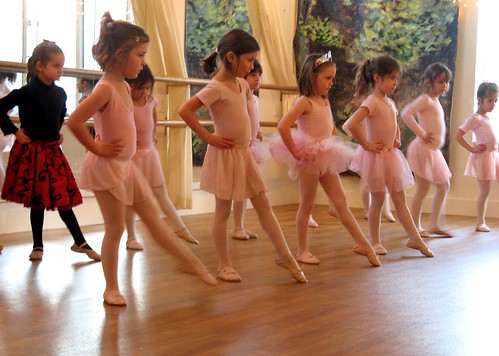
Ballet? Who Needs Ballet These Days?
Well, the obvious answer to that question is any aspiring dancer who wishes to make it, in whatever world they desire. The competition world, professional world, or teaching world, all require a deep ballet foundation. My reason for writing this blog, and opening with the previous statement, is the disappointing fact that most main stream studios today lack the imperative emphasis on technique, and what better way to gain technique than ballet class? I’m not ignoring the fact that not all of us are bun-heads, I myself prefer jazz to ballet any day, but it has been my personal experience that studios that lack the ballet technical training also are lacking in the jazz arena. I place blame on the management, not the kids. I’m sick of seeing little dance divas walking around the competitions, weekend after weekend, acting like they own the place, but once on stage have nothing technique wise to account for the attitude. The little ones in studios around the country are amateurs, I realize this, but they need to be molded and guided in the direction of professionalism. It all starts with technique and the habit of being in class. I am a product of one of these “fluff studios” as I like to call them. From age 6-13 I danced my little heart out almost every weekend at competitions with little credibility, and had no technique to show for it. I would go to rehearsals instead of technique class and my parents would spend outrageous amounts of money on costumes. The competitions were fun, a nice social setting, and I grew to love them. However, with this expanding passion for competition I lost all desire for the structure of class. This is what happens to kids around the country, and it angers me that they won’t be prepared for any higher level of dance education outside of their competition bubble. I had an epiphany at age 13, and realized I wasn’t getting what I needed to be a better dancer at my fluff studio, so I searched for greener pastures. I found the greenest of the green with Tempe Dance Academy, and I considered this starting point at a new studio the starting point of my serious dance training. Within a year my talent as a dancer had doubled, because of the more technique less competition policy at TDA. We still competed, and won most of the time, but it was minimal. I still enjoyed a very social environment, but I learned that dance is discipline and I found a new passion in the sphere of dance, TECHNIQUE, TECHNIQUE, TECHNIQUE! I thrived on it, and I wish I saw this dedication to fundamentals among more young dancers today. I wasn’t gung ho on dance my whole life, and I realize that some just dance for recreation and don’t care about preparing for a professional environment, but I grieve for the little Margot Fontaines, Desmond Richardsons, Twyla Tharps, and Gus Giordanos trapped in the fluff of unprofessional studios. I grieve for the children who want to make dance their whole life but are caught in this downward spiral of the competition world with no true technical training to use later in life. Studio owners must take heed to the examples shown by School of American Ballet and many, many other renowned schools who produce such beauty among their pupils. Such pure technicians, yet such individual dance entities. It’s not about an army of perfectly tuned dancers. After the technique is established and nurtured from a young age, then maturity in movement and the essence of individual performance quality sets in. My wide generalizations may be too critical, I mean after all if one opens a studio they obviously are making an effort to share their passion for dance with children, but it is inarguable that there are truths in my words.
So studio owners, give them fun and competitiveness, but for GOD’S SAKE GIVE THEM BALLET! Otherwise you’re just a bunch of fluff.
The Changing Face of Jazz
Jazz dance is a technique that shifts shapes with the passing of time. It's always been a technique that is somewhat hard to define. Jazz is done to a combination of many different musical forms from negro spirituals to modern day pop music, and its technique is gathered from a palette that is just as varied. Many different people have influenced jazz, Jack Cole, Gus Giordano, and Bob Fosse to name a few. Gus Giordano wrote in his book, "…just when I think I've figured it out it takes a new turn and I start thinking again." This constantly changing look kind makes jazz what it is. What influences jazz today? Jazz is clearly not a dance form that has stayed the same since it became popular in the past 100 or so years. What made something that was so cool yesterday not so 'hot' in today's jazz world? We'll see if we can find the answers.
The founders of jazz all had they're distinct styles that were influenced by their lives. What influences us today? One answer is the media that we're involved with daily, like TV. And one of the most popular things right now is reality TV. Americas Next Top Model, Dancing With The Stars and So You Think You Can Dance have had a huge impact on dance in America. I don't think any dancer who has watched Americas' Next Top Model and heard Tyra Banks say 'Fierce' has been able to refrain from using it to describe how someone else dances. Is it possible that after so many years Bob Fosse is still influencing movement with the hands on the hips?  Yes, its possible, but probably not as influential as Americas' Next Top Model. I don't believe I've ever seen so many hands on hips.
 I'm afraid it's true, jazz has begun to trade in jazz walks and Fosse's hands on the hips for
 runway walks and striking a pose. So You Think You Can Dance and Dancing with the Stars have also done their part to change the face of jazz. I find that anywhere I go, the first thing people ask when I tell them I'm a dancer is 'oh like on that one TV show…SYTYCD or Dancing with the Stars?' When it comes to what people think of when they hear the words dance, or jazz, these two shows are what come to mind. These shows have brought many choreographers (Mia Micheals, Brian Friedman, Dan Karaty, just to name a few) into the public eye and their styles are contributing to what jazz is being perceived as today.
Yes, its possible, but probably not as influential as Americas' Next Top Model. I don't believe I've ever seen so many hands on hips. I'm afraid it's true, jazz has begun to trade in jazz walks and Fosse's hands on the hips for  runway walks and striking a pose. So You Think You Can Dance and Dancing with the Stars have also done their part to change the face of jazz. I find that anywhere I go, the first thing people ask when I tell them I'm a dancer is 'oh like on that one TV show…SYTYCD or Dancing with the Stars?' When it comes to what people think of when they hear the words dance, or jazz, these two shows are what come to mind. These shows have brought many choreographers (Mia Micheals, Brian Friedman, Dan Karaty, just to name a few) into the public eye and their styles are contributing to what jazz is being perceived as today.
The internet has also influenced jazz dance. Music videos and performances are now available at the click of a button. It's become so easy to be influenced by what we see online. Random things, weird things, funny things, things like 'The Yes Dance.'
This one performance, as it said in the end is a new epidemic, and changed the face of dance and jazz forever. Although they can borrow the snaps from classical jazz dancers like Jack Cole
I have no idea where the rest of the random stuff in The Yes Dance came from, but its everywhere you go now.
I have no idea where the rest of the random stuff in The Yes Dance came from, but its everywhere you go now.
So what influences jazz trends, what decides what comes and goes, what stays and what is yesterdays news? We can look at music, tv, and internet, but the only real answer is that jazz is a reflection of our culture. As we continue to adapt and change in our various cracked out ways jazz will also, and that's what makes it versatile, expressionistic art form.
A Political Affair
For over seventy years, artists of national acclaim have graced the stage in the East Room of the White House. Who knew that politics and the arts had such a close relationship? Heads of state have been entertained by performers from every genre of dance and received numerous awards of recognition. Everything from classical ballet, contemporary modern dance, jazz, tap, and even Broadway have been showcased. The fact that talent of such high caliber was brought in highlights how supportive the government has been toward the arts. So here it goes, I am going to try and harmoniously marry my two passions – politics and dance.
 Baryshnikov had all the bases covered for classical ballet. His 1979 pas de deux with New York City ballerina Patricia McBride was a splash. He was invited by President and Mrs. Carter and performed several more times after that. Baryshnikov also received Kennedy Center Honors in 2000 from President Clinton, an award that “celebrates a lifetime of achievement in the arts.” Also, the American Ballet Theatre performed the Nutcracker in December of 2005, at the invitation of Laura Bush. Artistic Director Kevin McKenzie hosted this event for children of overseas troops. A plethora of Jerome Robbins’ ballets have also been performed at the White House.
Even tap has been a well recognized art form at the White House! Savion Glover, world famous tapper, put on a special performance for President Clinton in his program called “Savion Glover’s Stomp, Slide and Swing.” This 1998 presentation was aired on PBS as well as the Variety Arts Theater in New York City. Glover was called “the best tap dancer that ever lived…a genius” by tap great Gregory Hines and has won numerous Tony Awards. This performance featured a solo from Glover, as well as pieces from other tappers. This youtube video captures the stunning performance:
Historically, The Martha Graham Dance Company was the first troupe to pe rform at the White House. Invited by Eleanor Roosevelt in 1938, Martha created a special work called American Document that was about Abraham Lincoln and pride of American Independence. She would continue to perform for seven other presidents, receiving the Presidential Medal of Freedom from President Gerald Ford in 1976 (fun fact: the President’s wife, Betty Ford, was part of the Graham company prior to their marriage). At that same time, President Ford announced the provision of 12 million dollars in funding for the Cultural Challenge Grant program. These grants allowed for an additional $200 million to be generated for the arts. How cool?
 rform at the White House. Invited by Eleanor Roosevelt in 1938, Martha created a special work called American Document that was about Abraham Lincoln and pride of American Independence. She would continue to perform for seven other presidents, receiving the Presidential Medal of Freedom from President Gerald Ford in 1976 (fun fact: the President’s wife, Betty Ford, was part of the Graham company prior to their marriage). At that same time, President Ford announced the provision of 12 million dollars in funding for the Cultural Challenge Grant program. These grants allowed for an additional $200 million to be generated for the arts. How cool?
Jose Limon was also no stranger to the White House. He was a guest of President Kennedy in 1962 and later performed there in 1967 for a White House state dinner under Lyndon Johnson’s administration. His modern company performed a piece called The Moor’s Pavane, an adaptation of Shakespeare’s Othello. More recently, in 2006, Arthur Mitchell was invited to the White House to be honored for his work with the Dance Theatre of Harlem. This award was part of a televised event called “In Performance at the White House” and celebrated the work of numerous artists. The Dance Theatre of Harlem performed and brought awareness to their “community outreach programs that bring arts education to people all across America and around the world.”
 Baryshnikov had all the bases covered for classical ballet. His 1979 pas de deux with New York City ballerina Patricia McBride was a splash. He was invited by President and Mrs. Carter and performed several more times after that. Baryshnikov also received Kennedy Center Honors in 2000 from President Clinton, an award that “celebrates a lifetime of achievement in the arts.” Also, the American Ballet Theatre performed the Nutcracker in December of 2005, at the invitation of Laura Bush. Artistic Director Kevin McKenzie hosted this event for children of overseas troops. A plethora of Jerome Robbins’ ballets have also been performed at the White House.
Even tap has been a well recognized art form at the White House! Savion Glover, world famous tapper, put on a special performance for President Clinton in his program called “Savion Glover’s Stomp, Slide and Swing.” This 1998 presentation was aired on PBS as well as the Variety Arts Theater in New York City. Glover was called “the best tap dancer that ever lived…a genius” by tap great Gregory Hines and has won numerous Tony Awards. This performance featured a solo from Glover, as well as pieces from other tappers. This youtube video captures the stunning performance:
Even Broadway has also been appreciated by presidential administrations. Several “Salute to Broadway” performances have been given, featuring such acclaimed performers as Shirley Jones, Stubby Kaye, and Lee Roy Reams. Musicians have also given Presidents a trip down memory lane with sections played from Oklahoma!, Jersey Boys, and Porgy and Bess.
Wow - what a conglomeration of artists! There is great evidence throughout presidential history that the arts have been noticed and appreciated. Some of this information can be surprising, for one does not usually think of the President as being an advocate for the arts. However, this information goes to show that politics and dance do have a connection. It is obvious that American culture would not be the same without the contributions of modern and contemporary dance, classical ballet, jazz, tap, and even Broadway, and this is a fact that has been heavily endorsed by our government. Good to know – huh?
Don't Give Up the Dance
 It may seem impossible to balance being a dance major and your academics but I bet you did not know that dancing could in fact make you smarter. If you are thinking about getting some free time in your life, do not give up on dance. Even though it requires energy and time in your busy school schedule, research shows that your participation in dance can actually help you succeed in school. Not only can dance help your academics, but also it shows commitment and responsibility, which will aid you in the future.
“Critical Evidence: How the ARTS Benefit Student Achievement,” is a study by the National Assembly of State Arts Agencies. This study also reported on the positive connection between arts and improved learning. Additionally, research has shown that what students learn in the arts may help them to master other subjects, such as reading, math or social studies. If it makes you smarter, why would you want to stop dancing? Students who participate in arts learning experiences often improve their achievement in other realms of learning and life. In a well-documented national study using a federal database of over 25,000 middle and high school students, researchers from the University of California at Los Angeles found students with high arts involvement performed better on standardized achievement tests than students with low arts involvement. I know I could of used all the help I could get with the SAT.

Something that really helps me when the stress of school and dance becomes overwhelming, I just remember that everything will be okay and this will help me in the long run. It will challenge my mind and help me to grow intellectually. Not only will it keep me fit and in shape but it is a good tool for success in school. Try your best to keep your commitment to dance even when times get hard and you feel like you have nothing left in you to keep going. No matter what, don’t give up and remember the skills that you learn in dance and in school–creative thinking, problem solving, and teamwork–will help you throughout your whole life.
Breaking It Down by Sam Weinstein
When I think of krumping, I think of guys in baggy jeans thrashing around and going crazy to violent, angry rap music. I had no idea, until doing a little research, that krumping has a history, and a rich one at that. It started in South Central Los Angeles, and has become a major part of hip-hop culture. The style references African-American roots, and tribal dance. “Dance battles” are a big part of krumping, much like they used to be with break-dancing. The music people krump to is predominantly hip-hop based. It’s called “Buck” music and the originators call themselves The J-squad. They have some really good beats and instrumentals. Here is a link to see Lil C and The Neph Squad krumping to one of their tracks.
Someone who is definitely more well known, and someone I never knew was a krumper is Chris Brown! I was surprised to find out that he is really into it, and he doesn't just do a showy, watered down, choreographed version in his performances. Here is a link so you can see what I mean. Of course he has backup dancers on stage with him, but in my opinion he kills it with or without them.
Another style I wanted to look at was Popping and Locking. Popping is characterized by quickly contracting and relaxing your muscles to produce a jerking effect. Different parts of the body can be isolated, so you can do a chest pop, an arm pop, or a neck pop, etc. This style is also influenced by music, and popping is done to the beat of the music. When popping began, it was danced to funk, disco, and other music popular in the 1970's. Now it is predominantly danced to hip-hop, and some forms of electronica. I knew about popping and locking but I guess I never gave them enough credit, I mean come on, they're street styles right? It doesn't matter where they come from though. These techniques are legit and I was proved wrong when I discovered some pretty in-depth articles that were frankly, very impressive. Here, a guy who goes by the name "Boogie Walker" explains the differences between popping and locking-“locking has more of an ethnocentric and specialized foundation. I would consider the foundation of all styles of popping something related to mime. Mime has been around for thousands of years and in almost all cultures around the world. Locking, on the other hand, has its foundation directly and specifically in the African American dance tradition, going all the way back through the soul/Motown era to tapping and hoofing in the Vaudeville era. The principles of mime (isolations, illusional movements) are things that many people across many cultures have both discovered independently of each other and are found universally impressive due to their illusional nature.” I never would have thought that there could be such profound thought and writing about the nature of a street style! It just goes to show you never to judge something you don't know enough about.
The last thing I want to leave you with is this relatively new notion of Lyrical Hip-hop. So You Think You Can Dance really paved the way with this new style, and you rarely see any other form of hip-hop on the show now. One of the judges, Adam has confirmed that the show has explored a new style of hip-hop and that it has, without a doubt, "become a really legitimate, beautiful genre on its own." So, one last video clip of a medley of phenomenal lyrical hip-hop, enjoy ;)

Wednesday, November 5, 2008
"Bun-Head" Be Gone
How do you want to be known? A ballerina, a bun-head, a jazz dancer, or maybe just a dancer? Personally, I want to call my self simply a dancer. To me, the term dancer encompases being able to do all styles of dance. If dance is what you love, I think its important to have the drive and hunger to dive into all styles of dance whether it be Ballet, Modern, Jazz, Ballroom, African, Salsa, or Indian dance. In our generation, companies are diversifying their repertoire and their dancers each year. Ballet companies are no longer doing strictly classical ballets; they are taking in more modern/jazz style pieces. For example, top ballet companies such as New York City Ballet, Miami City Ballet, and American Ballet Theater have been doing contemporary works from Jerome Robbins and Twyla Tharp. On the flipside, modern companies such as Alvin Aiely, also do works that are very balletic in vocabulary and movement while also marinating a modern quality; for example the piece I am in right now, The Lark Ascending. As aspiring dancers, it is our job to become each and any role a choreographer asks us to be. Without the proper amount of exposure and technique and different styles of dance, you limit yourself to the endless opportunities available in the dance world.
Being able to adapt to all styles of dance is extremely important in being successful in the dance world. As students, it is in our best interest to absorb all types of dance that are available. Being strong in ballet, modern, and jazz can open so many doors to a dancer. Coming into SMU I was viewed as your typical “bun-head” a girl who was strong in ballet, but could not move like a jazz or modern dancer. As the year progressed I like to think that the stereotype on me changed. Second semester of freshman year when I got cast to be in Twyla Tharp’s, Octet, I felt well prepared stylistically because of my background in jazz. Although the piece was in pointe shoes and had a lot of ballet vocabulary, without the jazzy flavor the piece would not live up to the style of Twyla Tharp. We had to move both with a sense of being grounded and smooth, and at times had to move quickly with attitude and flare. Jazz influenced this movement so much in the sense that in a lot of the choreography your body was off center, you were off your leg, or low, or contracted. While in ballet you usually stay on top of the music and ride along the phrases, in jazz dance you learn to dance off the strong beats, you are given more freedom to syncopate and suspend movement, and you often ride the downbeat of the music. Typically, jazz dance has stronger and sharper movements with rolling hips and ungulated torsos. In classical ballet we are mostly upright and very clear. In jazz I feel that I have more freedom to make the dance my own instead of being bound in the confines of being upright and “correct” all the time as in ballet. Octet had a very down-to-earth pedestrian like feel to it. Without ever taking jazz, I do not think I could have ever adapted to the style of Tharp’s piece. I cannot imagine how awkward I would have felt when someone told me to do a hip roll and pop your pelvis forward without ever taking a jazz class! Absorbing the feel and essence of jazz dance is key in being a versatile dancer. To get a feel for Tharp’s jazzy style of dance check this out! Here is a piece of work from the Broadway musical Movin’ Out with choreography by Twyla Tharp.
Being able to adapt to all styles of dance is extremely important in being successful in the dance world. As students, it is in our best interest to absorb all types of dance that are available. Being strong in ballet, modern, and jazz can open so many doors to a dancer. Coming into SMU I was viewed as your typical “bun-head” a girl who was strong in ballet, but could not move like a jazz or modern dancer. As the year progressed I like to think that the stereotype on me changed. Second semester of freshman year when I got cast to be in Twyla Tharp’s, Octet, I felt well prepared stylistically because of my background in jazz. Although the piece was in pointe shoes and had a lot of ballet vocabulary, without the jazzy flavor the piece would not live up to the style of Twyla Tharp. We had to move both with a sense of being grounded and smooth, and at times had to move quickly with attitude and flare. Jazz influenced this movement so much in the sense that in a lot of the choreography your body was off center, you were off your leg, or low, or contracted. While in ballet you usually stay on top of the music and ride along the phrases, in jazz dance you learn to dance off the strong beats, you are given more freedom to syncopate and suspend movement, and you often ride the downbeat of the music. Typically, jazz dance has stronger and sharper movements with rolling hips and ungulated torsos. In classical ballet we are mostly upright and very clear. In jazz I feel that I have more freedom to make the dance my own instead of being bound in the confines of being upright and “correct” all the time as in ballet. Octet had a very down-to-earth pedestrian like feel to it. Without ever taking jazz, I do not think I could have ever adapted to the style of Tharp’s piece. I cannot imagine how awkward I would have felt when someone told me to do a hip roll and pop your pelvis forward without ever taking a jazz class! Absorbing the feel and essence of jazz dance is key in being a versatile dancer. To get a feel for Tharp’s jazzy style of dance check this out! Here is a piece of work from the Broadway musical Movin’ Out with choreography by Twyla Tharp.
So, to all those ballet boys and girls out there, don’t give anyone a reason to call you merely a “bun-head”…get out there and try anything and everything that you can get your hands on! Being versatile is the only way to make it out in the dance world! :)
The Irony of the Industry
The dance industry is a tough one to break into, and it’s made even tougher because of the talented people in it. It’s hard to find success as a professional dancer, but we are making it even harder for ourselves. As if remembering steps isn’t hard enough, we keep pushing the limits of physical and mental capacity with ungodly flexibility, technical trickery, and obscure choreographic nuances. The talent in the dance world is developing much too quickly, making it rather difficult to keep up. So…how about we take all this technique down a notch? Let’s just band together to make things a little easier on ourselves, purely in an effort to make dance more of a realistic career goal for the greater majority of dancers. There are plenty of opportunities for us to cut back, we just haven’t exactly embraced them yet. For instance, maybe the entire concept of turnout is overrated. Maybe, turn-in is in fact the new turnout; that would spice things up a bit since we have been dancing turned-out for over a century now. Not only would that minor adjustment make dance easier and put everyone on more of an even playing field, but it would also save us from years of injury and pain once we have retired from the world of dance to start our normal lives. Parallel is obviously more comfortable, so let’s just decide to look the other way while we eliminate turn out from our entire dance  vocabulary. While we’re at it, let’s all just agree that extension isn’t that cool, especially if you are not born with it. This is our chance to welcome low extension as a new alternative high extension; then we can all feel good about how our lines look. If everyone’s legs are low, it’s like nobody’s legs are low! Just think, forty-five degrees could be the new 180. Do I really need to explain what should happen to pointed feet? Those of us who were not born with daggers attached to our ankles should not be discriminated against; therefore, the pointing has to go too. While we could jump to the opposite end of the spectrum and try flexing our feet instead of pointing, that really would not be fair to those with a short Achilles. So starting today, dancing is done with turned-in, very low legs and limp, dangling feet. As the bounds of technical difficulty in dance continue to be expanded, many of us are left struggling to keep up with the backwards switch tilt axle leaps and other tricks. Everyone knows of, has a friend, or at least watched a thirty second Youtube clip of someone who can pirouette an inordinately large number of times in a row, or those little-bitty “performing artists” who contort themselves into somewhat of a vertical split involving one leg being wrenched up to the height of, or extending beyond, their head while simultaneously turning, or tap dancing, or basket weaving. All I have to say to that is stop. Honestly, how many pe
 ople on this earth can do that? Not many (I don’t think), so stop making the rest of us feel bad. We already have to wear a leotard and tights; don’t make me develop even worse self-esteem. (That brings up another good point: who likes the leo? The combination of the unforgiving spandex and with the not-so-slimming pink tights is sickening. With all the advances we have made in society, you would think someone could have come up with something better.) Anyways, I would like to hope that there is a place in the dance world for those of us who are not capable of such daring acrobatics. We all say that dance isn’t about the steps or the tricks, it’s about the passion and communicating and emotion and what not. This is why I love when competition and convention teachers go off on a tangent about how they want the dance to come from the heart and how the movement should be so much more than the steps; then they proceed to teach a combination that starts out a little something like: step, turn, turn, kick, run, run, leap, roll to the floor, step, turn and jump at the same time, and shimmy. Really? The only thing more confusing than those inspiring speeches is why teachers always expect all 150 of us to be able to do everything full out in those carpeted ballrooms. How about instead, we keep the intent behind the dancing but knock out some more of those technicalities. Of course it’s cool to make up intricate choreography or concepts for dances, but let’s all come to a consensus that the next time we start making up a dance, we begin weeding out anything that involves turning multiple times or balancing on one leg for a long period of time. That seems like a reasonable start. After all, we train our entire lives to become brilliant artists, not just a flexible facility; so let’s quit doing so many tendus and grande battements everyday. Every other industry makes it a point to take future applicants under the wing of those who have found success; why can’t we implement a similar system? Let’s set up some dance internships where we get coffee for members of the company and miraculously end up with a job there. It’s time we take control of the industry and do what we have to do to keep the dance alive! If that means that we dance turned-in, don’t balance, and never point our feet, so be it. I know I’ll do my part to keep the technique to a minimum, and in the meantime, let’s not get any more talented.
 vocabulary. While we’re at it, let’s all just agree that extension isn’t that cool, especially if you are not born with it. This is our chance to welcome low extension as a new alternative high extension; then we can all feel good about how our lines look. If everyone’s legs are low, it’s like nobody’s legs are low! Just think, forty-five degrees could be the new 180. Do I really need to explain what should happen to pointed feet? Those of us who were not born with daggers attached to our ankles should not be discriminated against; therefore, the pointing has to go too. While we could jump to the opposite end of the spectrum and try flexing our feet instead of pointing, that really would not be fair to those with a short Achilles. So starting today, dancing is done with turned-in, very low legs and limp, dangling feet. As the bounds of technical difficulty in dance continue to be expanded, many of us are left struggling to keep up with the backwards switch tilt axle leaps and other tricks. Everyone knows of, has a friend, or at least watched a thirty second Youtube clip of someone who can pirouette an inordinately large number of times in a row, or those little-bitty “performing artists” who contort themselves into somewhat of a vertical split involving one leg being wrenched up to the height of, or extending beyond, their head while simultaneously turning, or tap dancing, or basket weaving. All I have to say to that is stop. Honestly, how many pe
 ople on this earth can do that? Not many (I don’t think), so stop making the rest of us feel bad. We already have to wear a leotard and tights; don’t make me develop even worse self-esteem. (That brings up another good point: who likes the leo? The combination of the unforgiving spandex and with the not-so-slimming pink tights is sickening. With all the advances we have made in society, you would think someone could have come up with something better.) Anyways, I would like to hope that there is a place in the dance world for those of us who are not capable of such daring acrobatics. We all say that dance isn’t about the steps or the tricks, it’s about the passion and communicating and emotion and what not. This is why I love when competition and convention teachers go off on a tangent about how they want the dance to come from the heart and how the movement should be so much more than the steps; then they proceed to teach a combination that starts out a little something like: step, turn, turn, kick, run, run, leap, roll to the floor, step, turn and jump at the same time, and shimmy. Really? The only thing more confusing than those inspiring speeches is why teachers always expect all 150 of us to be able to do everything full out in those carpeted ballrooms. How about instead, we keep the intent behind the dancing but knock out some more of those technicalities. Of course it’s cool to make up intricate choreography or concepts for dances, but let’s all come to a consensus that the next time we start making up a dance, we begin weeding out anything that involves turning multiple times or balancing on one leg for a long period of time. That seems like a reasonable start. After all, we train our entire lives to become brilliant artists, not just a flexible facility; so let’s quit doing so many tendus and grande battements everyday. Every other industry makes it a point to take future applicants under the wing of those who have found success; why can’t we implement a similar system? Let’s set up some dance internships where we get coffee for members of the company and miraculously end up with a job there. It’s time we take control of the industry and do what we have to do to keep the dance alive! If that means that we dance turned-in, don’t balance, and never point our feet, so be it. I know I’ll do my part to keep the technique to a minimum, and in the meantime, let’s not get any more talented.
Breaking It Down
When I think of krumping, I think of guys in baggy jeans thrashing around and going crazy to violent, angry rap music. I had no idea, until doing a little research, that krumping has a history, and a rich one at that. It started in South Central Los Angeles, and has become a major part of hip-hop culture. The style references African-American roots, and tribal dance. “Dance battles” are a big part of krumping, much like they used to be with break-dancing. The music people krump to is predominantly hip-hop based. It’s called “Buck” music and the originators call themselves The J-squad. They have some really good beats and instrumentals. Here is a link to see Lil C and The Neph Squad krumping to one of their tracks.
Someone who is definitely more well known, and someone I never knew was a krumper is Chris Brown! I was surprised to find out that he is really into it, and he doesn't just do a showy, watered down, choreographed version in his performances. Here is a link so you can see what I mean. Of course he has backup dancers on stage with him, but in my opinion he kills it with or without them.
Another style I wanted to look at was Popping and Locking. Popping is characterized by quickly contracting and relaxing your muscles to produce a jerking effect. Different parts of the body can be isolated, so you can do a chest pop, an arm pop, or a neck pop, etc. This style is also influenced by music, and popping is done to the beat of the music. When popping began, it was danced to funk, disco, and other music popular in the 1970's. Now it is predominantly danced to hip-hop, and some forms of electronica. I knew about popping and locking but I guess I never gave them enough credit, I mean come on, they're street styles right? It doesn't matter where they come from though. These techniques are legit and I was proved wrong when I discovered some pretty in-depth articles that were frankly, very impressive. Here, a guy who goes by the name "Boogie Walker" explains the differences between popping and locking-“locking has more of an ethnocentric and specialized foundation. I would consider the foundation of all styles of popping something related to mime. Mime has been around for thousands of years and in almost all cultures around the world. Locking, on the other hand, has its foundation directly and specifically in the African American dance tradition, going all the way back through the soul/Motown era to tapping and hoofing in the Vaudeville era. The principles of mime (isolations, illusional movements) are things that many people across many cultures have both discovered independently of each other and are found universally impressive due to their illusional nature.” I never would have thought that there could be such profound thought and writing about the nature of a street style! It just goes to show you never to judge something you don't know enough about.
The last thing I want to leave you with is this relatively new notion of Lyrical Hip-hop. So You Think You Can Dance really paved the way with this new style, and you rarely see any other form of hip-hop on the show now. One of the judges, Adam has confirmed that the show has explored a new style of hip-hop and that it has, without a doubt, "become a really legitimate, beautiful genre on its own." So, one last video clip of a medley of phenomenal lyrical hip-hop, enjoy ;)
Someone who is definitely more well known, and someone I never knew was a krumper is Chris Brown! I was surprised to find out that he is really into it, and he doesn't just do a showy, watered down, choreographed version in his performances. Here is a link so you can see what I mean. Of course he has backup dancers on stage with him, but in my opinion he kills it with or without them.
Another style I wanted to look at was Popping and Locking. Popping is characterized by quickly contracting and relaxing your muscles to produce a jerking effect. Different parts of the body can be isolated, so you can do a chest pop, an arm pop, or a neck pop, etc. This style is also influenced by music, and popping is done to the beat of the music. When popping began, it was danced to funk, disco, and other music popular in the 1970's. Now it is predominantly danced to hip-hop, and some forms of electronica. I knew about popping and locking but I guess I never gave them enough credit, I mean come on, they're street styles right? It doesn't matter where they come from though. These techniques are legit and I was proved wrong when I discovered some pretty in-depth articles that were frankly, very impressive. Here, a guy who goes by the name "Boogie Walker" explains the differences between popping and locking-“locking has more of an ethnocentric and specialized foundation. I would consider the foundation of all styles of popping something related to mime. Mime has been around for thousands of years and in almost all cultures around the world. Locking, on the other hand, has its foundation directly and specifically in the African American dance tradition, going all the way back through the soul/Motown era to tapping and hoofing in the Vaudeville era. The principles of mime (isolations, illusional movements) are things that many people across many cultures have both discovered independently of each other and are found universally impressive due to their illusional nature.” I never would have thought that there could be such profound thought and writing about the nature of a street style! It just goes to show you never to judge something you don't know enough about.
The last thing I want to leave you with is this relatively new notion of Lyrical Hip-hop. So You Think You Can Dance really paved the way with this new style, and you rarely see any other form of hip-hop on the show now. One of the judges, Adam has confirmed that the show has explored a new style of hip-hop and that it has, without a doubt, "become a really legitimate, beautiful genre on its own." So, one last video clip of a medley of phenomenal lyrical hip-hop, enjoy ;)
Tuesday, November 4, 2008
The concept of what dance really is can be an unending debate, but I have always had a single opinion about what it is for me. When you dance, you are portraying a message through the movement. It is about giving the right amount of emotion and energy to capture the audience’s attention and keep it throughout the entire piece. However, sometimes dance can be completely the opposite. I experienced this kind of dance growing up in the competition dance world. There are a lot of great things that I learned dancing in this kind of atmosphere that I will never regret learning, like discipline and how to be hard worker. I will never forget the lessons that my dance teacher drilled in me almost every day about never giving up and pushing through no matter what. I grew as a dancer in this kind of life, but I really found a passion for dance when I got to my junior year in high school.I went to a performing arts high school and one of the styles of dance that we studied was modern. It was the first time I had ever experienced modern, but I really started to love it my junior year. I quickly found out that modern was not about how high my leg could go or how many turns I could do, but more about concepts like how much space can I cover in my movement or how much further to the ground could I get. It was an eye-opener for me. I had been trained since I was little that you couldn’t win unless you could do this many turns or you couldn’t get platinum unless your leg was a certain height. These pictures are just examples of an amazing ability but nothing coming from it.
 I had always struggled with flexibility and extension, which was one of the most important things you had to have to succeed. Because I never had this, I always put myself down and thought my dancing never stood a chance against my competitors. When I discovered modern, it was a style that felt good on my body for once. I felt more alive and more comfortable doing movements that were more in the ground and more emotionally based. I finally realized that no dancer needed perfect turnout or the highest leaps to create works of art through dance. In our classes here at SMU, performing in our technique classes is essential. My ballet teacher, Leslie Peck, always says that we constantly look like robots at barre when we should have expressions in our faces and life in our movement. Dancing is beautiful and should evoke some kind of emotion from those who watch it no matter the style. In jazz, our teacher, Lauren, wants us to be a character for some of the combinations we work on which can be a very challenging thing for a dancer sometimes. To be completely out of your comfort zone is scary but can be liberating at the same time. Most of the time, it is not just about the steps but about the sensation that comes from doing those steps. For some, the tricks are more important than what kind of message is portrayed. For others, no tricks are necessary for an exquisite piece. This video shows that even though the dancers have flexibility and extension that can be used for tricks, they are using it in a beautiful way through movement that has texture and life in it. One of my favorite modern companies right now is called the David Dorfman Dance Company. What captures my attention when these dancers dance are the looks on their faces. Half of the time, I don’t even watch the lower half of their body. They have the ability to make one step something more than just one step. They keep your attention the whole time no matter what kind of style they do. Another famous dancer that had the incredible ability to make a simple move so much more was Martha Graham. She would “use emotions as her tools to create a dance” (Jeanne Ruddy, New York Times). The movement would come from the emotion she felt inside. One of her most famous works was called Lamentation, and the reason it is so powerful is because it evokes pain and anguish from simple gestures. When the dancer is moving, she makes you feel what she feels. This kind of power should be what all movement should be like. Just moving across stage with one trick leading into another trick is not really what dance is about. It is about the passion that comes from within that leads the audience into a place that they will never forget.
 I had always struggled with flexibility and extension, which was one of the most important things you had to have to succeed. Because I never had this, I always put myself down and thought my dancing never stood a chance against my competitors. When I discovered modern, it was a style that felt good on my body for once. I felt more alive and more comfortable doing movements that were more in the ground and more emotionally based. I finally realized that no dancer needed perfect turnout or the highest leaps to create works of art through dance. In our classes here at SMU, performing in our technique classes is essential. My ballet teacher, Leslie Peck, always says that we constantly look like robots at barre when we should have expressions in our faces and life in our movement. Dancing is beautiful and should evoke some kind of emotion from those who watch it no matter the style. In jazz, our teacher, Lauren, wants us to be a character for some of the combinations we work on which can be a very challenging thing for a dancer sometimes. To be completely out of your comfort zone is scary but can be liberating at the same time. Most of the time, it is not just about the steps but about the sensation that comes from doing those steps. For some, the tricks are more important than what kind of message is portrayed. For others, no tricks are necessary for an exquisite piece. This video shows that even though the dancers have flexibility and extension that can be used for tricks, they are using it in a beautiful way through movement that has texture and life in it. One of my favorite modern companies right now is called the David Dorfman Dance Company. What captures my attention when these dancers dance are the looks on their faces. Half of the time, I don’t even watch the lower half of their body. They have the ability to make one step something more than just one step. They keep your attention the whole time no matter what kind of style they do. Another famous dancer that had the incredible ability to make a simple move so much more was Martha Graham. She would “use emotions as her tools to create a dance” (Jeanne Ruddy, New York Times). The movement would come from the emotion she felt inside. One of her most famous works was called Lamentation, and the reason it is so powerful is because it evokes pain and anguish from simple gestures. When the dancer is moving, she makes you feel what she feels. This kind of power should be what all movement should be like. Just moving across stage with one trick leading into another trick is not really what dance is about. It is about the passion that comes from within that leads the audience into a place that they will never forget.
Subscribe to:
Posts (Atom)

