Growing up, people used to make fun and look down on me because I was so passionate about dance. They laughed when I said I couldn’t go to a birthday party because of Nutcracker rehearsal, and gave dirty looks when I said I couldn’t go to the high school football game because I had to go to ballet class. My friends never understood why I went away for a month over the summer to dance. To this day, people do not understand the passion that I have for dance. For all dancers out there, dance is life, and outsiders have a hard time realizing that. What non-dancers also don’t realize is that dance is everywhere and full of opportunities. My favorite question is, “So what are you going to do with dance? Become a stripper?” People don’t see that dance is all around them. It’s on the stage, in commercials, in music videos, in movies, in parades, in shows, on the computer, and that is what makes the art of dance so special. That is what we work hard for. Others work hard to get a good job, and we work hard to have the opportunities to do what we love.
When people watch music videos, musicals, parades, etc. they see the dancers, but they don’t see what hard work is put into it, and that is why people don’t appreciate dance as much as they should. They don’t see the blood, sweat, and tears going on backstage. But honestly, their views on dance don’t make a difference, because they will never have some of the incredible opportunities dancers do. Take music videos for example. Will a non-dancer ever have the opportunity to dance with famous musical artists like Britney Spears, Beyonce, Michael Jackson, or Justin Timberlake? Most likely not. Dance is what makes a music video so entertaining. Take Britney Spears’ first music video “Hit Me Baby One More Time.” A non-dancer may just see a girl with pigtails, but the other dancers in the video are the ones that make the video entertaining. Take a pretty girl with pigtails plus back up dancers and that makes a pretty darn good music video.
http://www.youtube.com/watch?v=_bsniYwSaWg
Movies and television also have hundreds of opportunities for dancers. Movies including Grease, Footloose, Dirty Dancing, You Got Served, High School Musical (which is my personal favorite, especially the third one), and many others have huge dancing roles. There are also television shows such as So You Think You Can Dance, Dancing With The Stars, and America’s Best Dance Crew that all offer opportunity for all aspiring dancers. The thing about dance in the media is that I think that it is starting to show others how special dance is. Ever since SYTYCD aired, people are slowly coming to appreciate what dancers do, and the passion they have for it. SYTYCD reveals what dancers go through both backstage and onstage, and when non-dancers see the tears, work, passion, sweat, and love, it makes them understand what a dancer’s life is like.
People today, may not have full appreciation for the dance world, but they are slowly coming around thanks to the media. The opportunities dancers have don’t even compare to non-dancers. Movies, commercials, Broadway, music videos, and the list goes on and on. So the next time someone asks you the question, “So what are you going to do with dance? Become a stripper?” you can laugh and explain to them all of the opportunities there are in the dance world, and then they will feel stupid.
Thursday, November 6, 2008

Ballet: The Basis of All Dance Forms
Why is it that dance critics always reminds dancers that ballet is the center or basis of all dance forms, and yet it is the only form of dance not showcased on prime time television these days. Shows like So You Think You Can Dance and Dancing With The Stars showcase jazz, contemporary, all forms of ballroom, crumping, hip-hop, and Broadway. Dancing With The Stars even added to the latest episode of their show, the salsa, hustle, and West Coast Swing. On the Dancing With The Stars the results show there is often a Macy’s Stars of Dance showcase where famous dancers and choreographers from all dance forms come to perform. But interestingly enough, there has not been one ballet piece; there is not one small tribute to the earliest and most important form of dance.
On the last episode of Dancing With The Stars, Bruno, a judge, even mentioned to one of the dancing ballroom kids that he noticed she was taking ballet classes, and that she should keep them up; he explained that he could notice the ballet technique through her clean lines. In addition, the show So You Think You Can Dance always compliments the dancers or contestants with great ballet technique, and how this technique shows. This is shown through contestant Danny Tidwell's (who danced with American Ballet Theater) dancing. Ballet allows dancers to present grace, poise, lines, strength, speed and focus.
I know that the public may not find ballet as entertaining as the other forms of dance, but at least a small tribute should be made. I have attached a music video that includes ballet technique with a contemporary feel. The difficulty is apparent but it also appealing to a general audience. I understand that stars would not be able to have enough time to do ballet correctly. But, it could be showcased in a Macy’s segment or placed as an option for experienced dancers on So You Think You Can Dance. Are the producers and judges on So You Think You Can Dance worried that contestants will not be able to keep up with such a difficult form of dance? Wouldn’t a small segment of ballet show the contestant’s true colors and technique? Why are dancers constantly reminded of ballet’s importance, but it is words instead of action. Don’t say it; show it.
On the last episode of Dancing With The Stars, Bruno, a judge, even mentioned to one of the dancing ballroom kids that he noticed she was taking ballet classes, and that she should keep them up; he explained that he could notice the ballet technique through her clean lines. In addition, the show So You Think You Can Dance always compliments the dancers or contestants with great ballet technique, and how this technique shows. This is shown through contestant Danny Tidwell's (who danced with American Ballet Theater) dancing. Ballet allows dancers to present grace, poise, lines, strength, speed and focus.
I know that the public may not find ballet as entertaining as the other forms of dance, but at least a small tribute should be made. I have attached a music video that includes ballet technique with a contemporary feel. The difficulty is apparent but it also appealing to a general audience. I understand that stars would not be able to have enough time to do ballet correctly. But, it could be showcased in a Macy’s segment or placed as an option for experienced dancers on So You Think You Can Dance. Are the producers and judges on So You Think You Can Dance worried that contestants will not be able to keep up with such a difficult form of dance? Wouldn’t a small segment of ballet show the contestant’s true colors and technique? Why are dancers constantly reminded of ballet’s importance, but it is words instead of action. Don’t say it; show it.
Classical Versus Contemporary
When watching dance, one may be quick to designate the piece being watched as classical or contemporary without giving much thought or effort. What is it about the dance that allows one to quickly jump to this conclusion? After contemplating this, I find that the music, use of the dancer’s upper body, and incorporation of “street” dance are some of the major factors that differentiate classical from contemporary dance.
In my opinion, one difference that separates contemporary jazz from more classical styles of dance is the music. In contemporary styles of dance, there is a stronger beat and often more electronic sound effects, where more classical forms of dance use music that often has more instrumentation and less vocal effects. Also, the music that is used for more classical styles generally has a much more even or square beat that is the same throughout the entire piece, whereas music used in more contemporary forms of jazz may not have the same beat for the entirety of the piece. The difference demonstrated in the beats of music is a clue to me of the style of dance that goes with them. Classical styles are generally more rigid, meaning that they follow guidelines, or a clearly outlined technique, whereas contemporary jazz more likely disregards a formulated technique. Though music is not directly dance, dance and music go hand in hand. Therefore, the type of music dictates the style of dance, which is why I believe that it differentiates classical from contemporary.
Classical styles of dance, including classical forms of jazz, usage of the upper body is much different than that of contemporary jazz. Classical styles follow a technique, or specific style that has a very clearly outlined and specific placement for the upper body. There are of course always exceptions to this specific placement as requested from the style or technique, but through my observations I have noticed that the upper body is more properly placed and held in classical styles. There is by far much more freedom in the upper body in contemporary jazz. In many instances, even in set choreography, the dancers have much more artistic freedom in their upper bodies. Also, contemporary jazz allows for more options with the upper body both stylistically and dynamically. The definition of “beauty” in dance has evolved over the years, which has allowed for more options of the upper body that today’s audience would still find interesting and aesthetically pleasing. There are also more options dynamically in contemporary jazz. It is more acceptable to have sharp or rigid movements than it is in purely classical forms. In my opinion this is because the popping action may have been seen as sensual to the audience of classical styles.
Another major difference in contemporary jazz and classical styles is the incorporation of everyday dance moves that can be found on the street, such as hip hop or break dancing, into choreography in contemporary jazz. Although some ballroom dance may be incorporated into classical jazz, the extent of its usage is not near the extent that contemporary jazz uses.
The mere term “contemporary” is arbitrary. What we define as “contemporary” dance today will become something else in a few years after another style emerges in the dance world that will become the “contemporary” style of the day.
In my opinion, one difference that separates contemporary jazz from more classical styles of dance is the music. In contemporary styles of dance, there is a stronger beat and often more electronic sound effects, where more classical forms of dance use music that often has more instrumentation and less vocal effects. Also, the music that is used for more classical styles generally has a much more even or square beat that is the same throughout the entire piece, whereas music used in more contemporary forms of jazz may not have the same beat for the entirety of the piece. The difference demonstrated in the beats of music is a clue to me of the style of dance that goes with them. Classical styles are generally more rigid, meaning that they follow guidelines, or a clearly outlined technique, whereas contemporary jazz more likely disregards a formulated technique. Though music is not directly dance, dance and music go hand in hand. Therefore, the type of music dictates the style of dance, which is why I believe that it differentiates classical from contemporary.
Classical styles of dance, including classical forms of jazz, usage of the upper body is much different than that of contemporary jazz. Classical styles follow a technique, or specific style that has a very clearly outlined and specific placement for the upper body. There are of course always exceptions to this specific placement as requested from the style or technique, but through my observations I have noticed that the upper body is more properly placed and held in classical styles. There is by far much more freedom in the upper body in contemporary jazz. In many instances, even in set choreography, the dancers have much more artistic freedom in their upper bodies. Also, contemporary jazz allows for more options with the upper body both stylistically and dynamically. The definition of “beauty” in dance has evolved over the years, which has allowed for more options of the upper body that today’s audience would still find interesting and aesthetically pleasing. There are also more options dynamically in contemporary jazz. It is more acceptable to have sharp or rigid movements than it is in purely classical forms. In my opinion this is because the popping action may have been seen as sensual to the audience of classical styles.
Another major difference in contemporary jazz and classical styles is the incorporation of everyday dance moves that can be found on the street, such as hip hop or break dancing, into choreography in contemporary jazz. Although some ballroom dance may be incorporated into classical jazz, the extent of its usage is not near the extent that contemporary jazz uses.
The mere term “contemporary” is arbitrary. What we define as “contemporary” dance today will become something else in a few years after another style emerges in the dance world that will become the “contemporary” style of the day.
Ballet? Who Needs Ballet These Days?
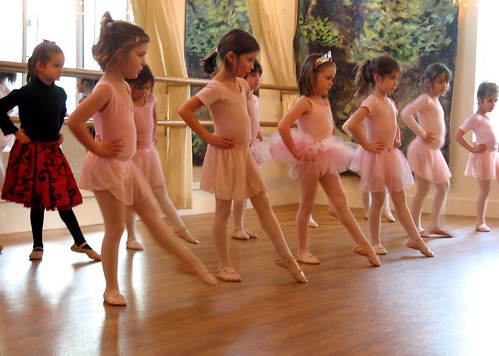
Well, the obvious answer to that question is any aspiring dancer who wishes to make it, in whatever world they desire. The competition world, professional world, or teaching world, all require a deep ballet foundation. My reason for writing this blog, and opening with the previous statement, is the disappointing fact that most main stream studios today lack the imperative emphasis on technique, and what better way to gain technique than ballet class? I’m not ignoring the fact that not all of us are bun-heads, I myself prefer jazz to ballet any day, but it has been my personal experience that studios that lack the ballet technical training also are lacking in the jazz arena. I place blame on the management, not the kids. I’m sick of seeing little dance divas walking around the competitions, weekend after weekend, acting like they own the place, but once on stage have nothing technique wise to account for the attitude. The little ones in studios around the country are amateurs, I realize this, but they need to be molded and guided in the direction of professionalism. It all starts with technique and the habit of being in class. I am a product of one of these “fluff studios” as I like to call them. From age 6-13 I danced my little heart out almost every weekend at competitions with little credibility, and had no technique to show for it. I would go to rehearsals instead of technique class and my parents would spend outrageous amounts of money on costumes. The competitions were fun, a nice social setting, and I grew to love them. However, with this expanding passion for competition I lost all desire for the structure of class. This is what happens to kids around the country, and it angers me that they won’t be prepared for any higher level of dance education outside of their competition bubble. I had an epiphany at age 13, and realized I wasn’t getting what I needed to be a better dancer at my fluff studio, so I searched for greener pastures. I found the greenest of the green with Tempe Dance Academy, and I considered this starting point at a new studio the starting point of my serious dance training. Within a year my talent as a dancer had doubled, because of the more technique less competition policy at TDA. We still competed, and won most of the time, but it was minimal. I still enjoyed a very social environment, but I learned that dance is discipline and I found a new passion in the sphere of dance, TECHNIQUE, TECHNIQUE, TECHNIQUE! I thrived on it, and I wish I saw this dedication to fundamentals among more young dancers today. I wasn’t gung ho on dance my whole life, and I realize that some just dance for recreation and don’t care about preparing for a professional environment, but I grieve for the little Margot Fontaines, Desmond Richardsons, Twyla Tharps, and Gus Giordanos trapped in the fluff of unprofessional studios. I grieve for the children who want to make dance their whole life but are caught in this downward spiral of the competition world with no true technical training to use later in life. Studio owners must take heed to the examples shown by School of American Ballet and many, many other renowned schools who produce such beauty among their pupils. Such pure technicians, yet such individual dance entities. It’s not about an army of perfectly tuned dancers. After the technique is established and nurtured from a young age, then maturity in movement and the essence of individual performance quality sets in. My wide generalizations may be too critical, I mean after all if one opens a studio they obviously are making an effort to share their passion for dance with children, but it is inarguable that there are truths in my words.
So studio owners, give them fun and competitiveness, but for GOD’S SAKE GIVE THEM BALLET! Otherwise you’re just a bunch of fluff.
The Changing Face of Jazz
Jazz dance is a technique that shifts shapes with the passing of time. It's always been a technique that is somewhat hard to define. Jazz is done to a combination of many different musical forms from negro spirituals to modern day pop music, and its technique is gathered from a palette that is just as varied. Many different people have influenced jazz, Jack Cole, Gus Giordano, and Bob Fosse to name a few. Gus Giordano wrote in his book, "…just when I think I've figured it out it takes a new turn and I start thinking again." This constantly changing look kind makes jazz what it is. What influences jazz today? Jazz is clearly not a dance form that has stayed the same since it became popular in the past 100 or so years. What made something that was so cool yesterday not so 'hot' in today's jazz world? We'll see if we can find the answers.
The founders of jazz all had they're distinct styles that were influenced by their lives. What influences us today? One answer is the media that we're involved with daily, like TV. And one of the most popular things right now is reality TV. Americas Next Top Model, Dancing With The Stars and So You Think You Can Dance have had a huge impact on dance in America. I don't think any dancer who has watched Americas' Next Top Model and heard Tyra Banks say 'Fierce' has been able to refrain from using it to describe how someone else dances. Is it possible that after so many years Bob Fosse is still influencing movement with the hands on the hips?  Yes, its possible, but probably not as influential as Americas' Next Top Model. I don't believe I've ever seen so many hands on hips.
  I'm afraid it's true, jazz has begun to trade in jazz walks and Fosse's hands on the hips for
  runway walks and striking a pose. So You Think You Can Dance and Dancing with the Stars have also done their part to change the face of jazz. I find that anywhere I go, the first thing people ask when I tell them I'm a dancer is 'oh like on that one TV show…SYTYCD or Dancing with the Stars?' When it comes to what people think of when they hear the words dance, or jazz, these two shows are what come to mind. These shows have brought many choreographers (Mia Micheals, Brian Friedman, Dan Karaty, just to name a few) into the public eye and their styles are contributing to what jazz is being perceived as today.
Yes, its possible, but probably not as influential as Americas' Next Top Model. I don't believe I've ever seen so many hands on hips. I'm afraid it's true, jazz has begun to trade in jazz walks and Fosse's hands on the hips for  runway walks and striking a pose. So You Think You Can Dance and Dancing with the Stars have also done their part to change the face of jazz. I find that anywhere I go, the first thing people ask when I tell them I'm a dancer is 'oh like on that one TV show…SYTYCD or Dancing with the Stars?' When it comes to what people think of when they hear the words dance, or jazz, these two shows are what come to mind. These shows have brought many choreographers (Mia Micheals, Brian Friedman, Dan Karaty, just to name a few) into the public eye and their styles are contributing to what jazz is being perceived as today.
The internet has also influenced jazz dance. Music videos and performances are now available at the click of a button. It's become so easy to be influenced by what we see online. Random things, weird things, funny things, things like 'The Yes Dance.'
This one performance, as it said in the end is a new epidemic, and changed the face of dance and jazz forever. Although they can borrow the snaps from classical jazz dancers like Jack Cole
I have no idea where the rest of the random stuff in The Yes Dance came from, but its everywhere you go now.
I have no idea where the rest of the random stuff in The Yes Dance came from, but its everywhere you go now.
So what influences jazz trends, what decides what comes and goes, what stays and what is yesterdays news? We can look at music, tv, and internet, but the only real answer is that jazz is a reflection of our culture. As we continue to adapt and change in our various cracked out ways jazz will also, and that's what makes it versatile, expressionistic art form.
A Political Affair
For over seventy years, artists of national acclaim have graced the stage in the East Room of the White House. Who knew that politics and the arts had such a close relationship? Heads of state have been entertained by performers from every genre of dance and received numerous awards of recognition. Everything from classical ballet, contemporary modern dance, jazz, tap, and even Broadway have been showcased. The fact that talent of such high caliber was brought in highlights how supportive the government has been toward the arts. So here it goes, I am going to try and harmoniously marry my two passions – politics and dance.
 Baryshnikov had all the bases covered for classical ballet. His 1979 pas de deux with New York City ballerina Patricia McBride was a splash. He was invited by President and Mrs. Carter and performed several more times after that. Baryshnikov also received Kennedy Center Honors in 2000 from President Clinton, an award that “celebrates a lifetime of achievement in the arts.” Also, the American Ballet Theatre performed the Nutcracker in December of 2005, at the invitation of Laura Bush. Artistic Director Kevin McKenzie hosted this event for children of overseas troops. A plethora of Jerome Robbins’ ballets have also been performed at the White House.
Even tap has been a well recognized art form at the White House! Savion Glover, world famous tapper, put on a special performance for President Clinton in his program called “Savion Glover’s Stomp, Slide and Swing.” This 1998 presentation was aired on PBS as well as the Variety Arts Theater in New York City. Glover was called “the best tap dancer that ever lived…a genius” by tap great Gregory Hines and has won numerous Tony Awards. This performance featured a solo from Glover, as well as pieces from other tappers. This youtube video captures the stunning performance:
Historically, The Martha Graham Dance Company was the first troupe to pe rform at the White House. Invited by Eleanor Roosevelt in 1938, Martha created a special work called American Document that was about Abraham Lincoln and pride of American Independence. She would continue to perform for seven other presidents, receiving the Presidential Medal of Freedom from President Gerald Ford in 1976 (fun fact: the President’s wife, Betty Ford, was part of the Graham company prior to their marriage). At that same time, President Ford announced the provision of 12 million dollars in funding for the Cultural Challenge Grant program. These grants allowed for an additional $200 million to be generated for the arts. How cool?
 rform at the White House. Invited by Eleanor Roosevelt in 1938, Martha created a special work called American Document that was about Abraham Lincoln and pride of American Independence. She would continue to perform for seven other presidents, receiving the Presidential Medal of Freedom from President Gerald Ford in 1976 (fun fact: the President’s wife, Betty Ford, was part of the Graham company prior to their marriage). At that same time, President Ford announced the provision of 12 million dollars in funding for the Cultural Challenge Grant program. These grants allowed for an additional $200 million to be generated for the arts. How cool?
 Jose Limon was also no stranger to the White House. He was a guest of President Kennedy in 1962 and later performed there in 1967 for a White House state dinner under Lyndon Johnson’s administration. His modern company performed a piece called The Moor’s Pavane, an adaptation of Shakespeare’s Othello. More recently, in 2006, Arthur Mitchell was invited to the White House to be honored for his work with the Dance Theatre of Harlem. This award was part of a televised event called “In Performance at the White House” and celebrated the work of numerous artists. The Dance Theatre of Harlem performed and brought awareness to their “community outreach programs that bring arts education to people all across America and around the world.”
 Baryshnikov had all the bases covered for classical ballet. His 1979 pas de deux with New York City ballerina Patricia McBride was a splash. He was invited by President and Mrs. Carter and performed several more times after that. Baryshnikov also received Kennedy Center Honors in 2000 from President Clinton, an award that “celebrates a lifetime of achievement in the arts.” Also, the American Ballet Theatre performed the Nutcracker in December of 2005, at the invitation of Laura Bush. Artistic Director Kevin McKenzie hosted this event for children of overseas troops. A plethora of Jerome Robbins’ ballets have also been performed at the White House.
Even tap has been a well recognized art form at the White House! Savion Glover, world famous tapper, put on a special performance for President Clinton in his program called “Savion Glover’s Stomp, Slide and Swing.” This 1998 presentation was aired on PBS as well as the Variety Arts Theater in New York City. Glover was called “the best tap dancer that ever lived…a genius” by tap great Gregory Hines and has won numerous Tony Awards. This performance featured a solo from Glover, as well as pieces from other tappers. This youtube video captures the stunning performance:
Even Broadway has also been appreciated by presidential administrations. Several “Salute to Broadway” performances have been given, featuring such acclaimed performers as Shirley Jones, Stubby Kaye, and Lee Roy Reams. Musicians have also given Presidents a trip down memory lane with sections played from Oklahoma!, Jersey Boys, and Porgy and Bess.
Wow - what a conglomeration of artists! There is great evidence throughout presidential history that the arts have been noticed and appreciated. Some of this information can be surprising, for one does not usually think of the President as being an advocate for the arts. However, this information goes to show that politics and dance do have a connection. It is obvious that American culture would not be the same without the contributions of modern and contemporary dance, classical ballet, jazz, tap, and even Broadway, and this is a fact that has been heavily endorsed by our government. Good to know – huh?
Don't Give Up the Dance
 It may seem impossible to balance being a dance major and your academics but I bet you did not know that dancing could in fact make you smarter. If you are thinking about getting some free time in your life, do not give up on dance. Even though it requires energy and time in your busy school schedule, research shows that your participation in dance can actually help you succeed in school. Not only can dance help your academics, but also it shows commitment and responsibility, which will aid you in the future.
 “Critical Evidence: How the ARTS Benefit Student Achievement,” is a study by the National Assembly of State Arts Agencies. This study also reported on the positive connection between arts and improved learning. Additionally, research has shown that what students learn in the arts may help them to master other subjects, such as reading, math or social studies. If it makes you smarter, why would you want to stop dancing? Students who participate in arts learning experiences often improve their achievement in other realms of learning and life. In a well-documented national study using a federal database of over 25,000 middle and high school students, researchers from the University of California at Los Angeles found students with high arts involvement performed better on standardized achievement tests than students with low arts involvement. I know I could of used all the help I could get with the SAT.

Something that really helps me when the stress of school and dance becomes overwhelming, I just remember that everything will be okay and this will help me in the long run. It will challenge my mind and help me to grow intellectually. Not only will it keep me fit and in shape but it is a good tool for success in school. Try your best to keep your commitment to dance even when times get hard and you feel like you have nothing left in you to keep going. No matter what, don’t give up and remember the skills that you learn in dance and in school–creative thinking, problem solving, and teamwork–will help you throughout your whole life.
Subscribe to:
Posts (Atom)

